INDUSTRY INSIGHTS
What Is the Reflow Process in PCB Soldering?
Reflow soldering is a fast, reliable method used across electronics manufacturing. You’ll find it in applications like wearable medical sensors, flight-critical avionics, industrial controls, and compact consumer devices. When solder joints need precision and consistency, reflow delivers.
The process handles complex assemblies without slowing down production, making it a solid choice for prototyping, short-run builds, and scaling once the design is locked. Engineers count on it for repeatability, speed, and clean thermal control across even the most compact layouts. It’s a key part of high-quality
PCBA and prototyping services that demand accuracy under pressure.
Why the Reflow Process Matters in PCB Assembly
Every soldering method has tradeoffs, but reflow stands out for speed, precision, and repeatability. Those three factors make a real difference when you're racing toward a working prototype. It’s especially effective for surface-mount components, which dominate modern board designs in aerospace, robotics, medical, and industrial electronics.
The reflow process forms strong, reliable joints without damaging sensitive parts. It handles fine-pitch ICs, BGAs, and tight tolerances without adding manual cleanup or rework. That’s a major plus for engineers working on dense layouts or multi-layer boards.
For fast-turn builds, reflow also streamlines production. Once the paste is applied and parts are placed, the thermal profile takes over. No second-guessing heat levels or hand-soldering around delicate chips. That means fewer surprises during testing and a smoother path to functional validation. It gets your board off the bench and into real-world testing faster.
Understanding the Reflow Process in Soldering
Reflow soldering begins with applying solder paste to the board using a stencil. This paste contains a mix of powdered solder and flux, which temporarily holds components in place and helps form clean joints during heating.
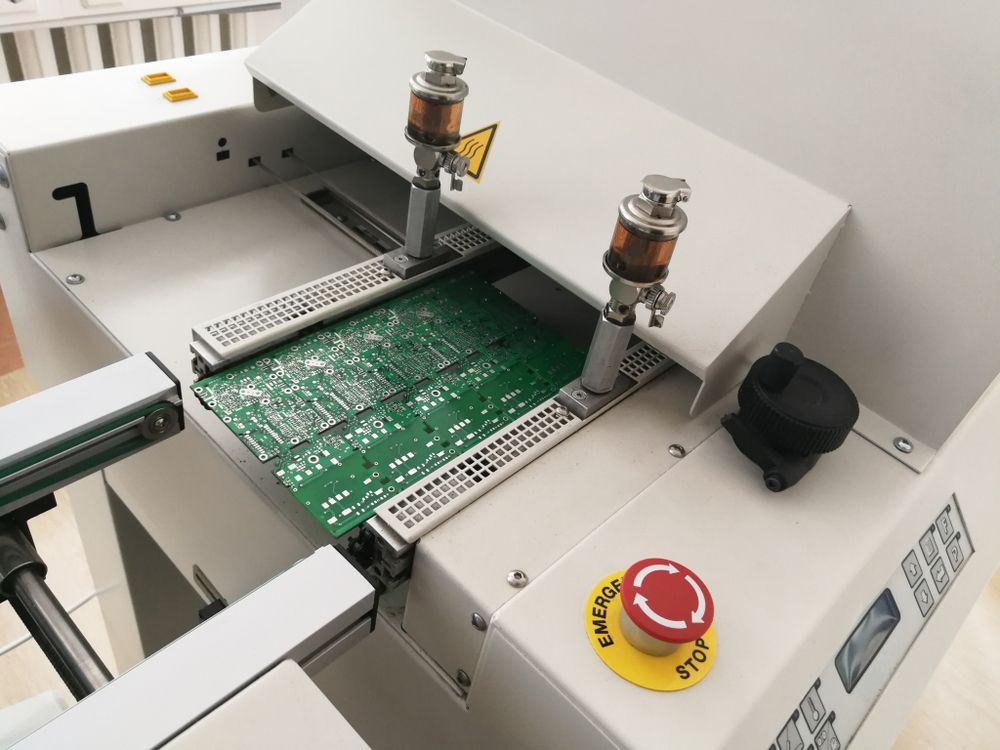
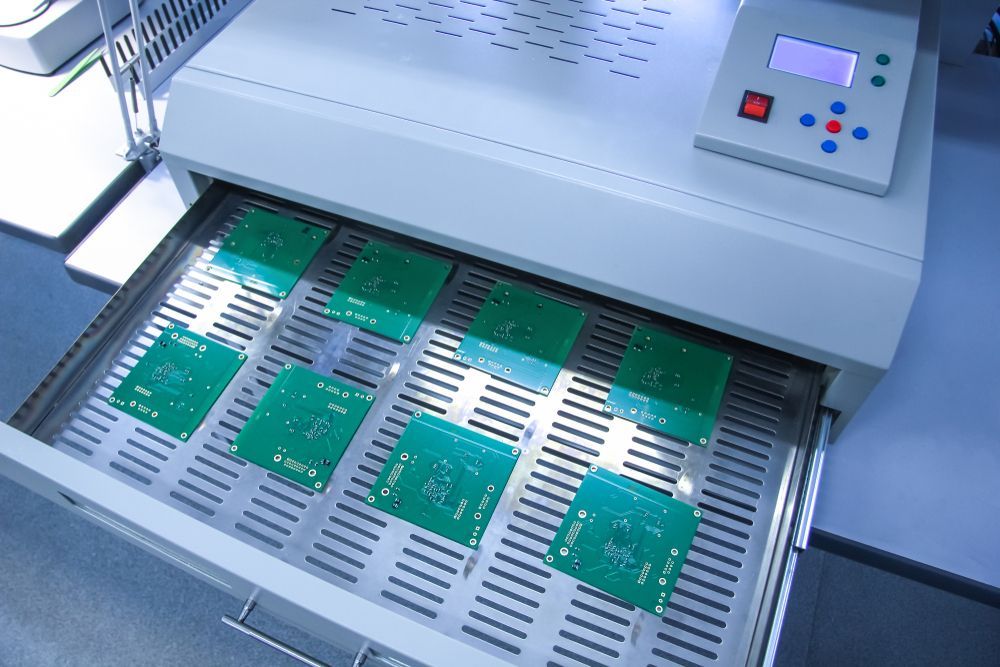
Next, pick-and-place machines position surface-mount components onto the paste. Once placement is complete, the board moves into a reflow oven where it's gradually heated using a controlled thermal profile.
The profile moves through distinct temperature zones: preheat, soak, reflow, and cooling. Each stage activates the flux, melts the solder, and creates strong, conductive connections. The goal is even heat distribution across the board without harming parts or causing defects like tomb stoning or voids.
That approach supports both simple and complex builds, making it reliable for everything from low-volume prototypes to full-scale
electronic PCB assembly.
Step-by-Step Stages of Reflow Soldering
Each stage in the reflow process plays a specific role in creating reliable solder joints. A typical thermal profile includes four key steps:
Preheat.
The board is gradually warmed to reduce thermal shock. This allows volatile solvents in the solder paste to begin evaporating while preparing the flux for activation.
Soak.
The temperature is held steady to activate the flux, remove oxides, and ensure even heating across the PCB. This prevents cold joints and helps components settle into place.
Reflow (Peak Temperature).
The board reaches peak temperature. Solder melts, wets the leads and pads, and forms solid electrical connections. Timing here is critical to avoid overheating.
Cooling.
The temperature drops in a controlled manner to properly solidify joints and lock components in place without creating stress cracks or voids.
Each step avoids common soldering issues and supports repeatable results. Ninja Circuits uses
vapor phase
reflow soldering for added thermal consistency and lower risk of component stress.
Advantages and Limitations of Reflow Soldering
Reflow soldering is widely used for good reason, but like any method, it has boundaries. Here's a quick breakdown.
Advantages:
- Supports high-density layouts. Ideal for fine-pitch components, BGAs, and compact board designs.
- Repeatable results. Consistent solder joints reduce the need for rework and inspection.
- Fast throughput. Once programmed, ovens can process multiple boards quickly.
- Minimal manual labor. Great for short-run or prototype jobs where speed matters.
Limitations:
- Less suited for through-hole parts. Additional steps like wave soldering or hand soldering may be needed.
- Requires precise thermal control. Improper profiles can cause defects such as tomb stoning or bridging.
- Upfront setup time. Creating stencils, loading machines, and tuning profiles takes planning.
Knowing when reflow fits your design helps avoid delays, defects, and unnecessary rework.
Common Reflow Profiles and Best Practices
A well-tuned reflow profile often decides whether joints are solid or a failure point. Most profiles follow a four-stage curve, but exact temperatures and timing depend on layout, component mix, and solder paste.
Common profiles include:
- Ramp-to-peak. A gradual rise in temperature to the peak zone. Simple and widely used for general-purpose boards.
- Soak profile. Adds a plateau before the peak to help heat distribute evenly. Useful for complex or high-mass assemblies.
- Ramp-soak-spike. Combines both approaches for tighter thermal control, especially on dense or multilayer designs.
Best practices:
- Match the profile to the solder paste specs
- Avoid thermal shock by limiting rapid changes in temperature
- Test profiles during early prototyping to catch issues before production
Refining your reflow profile is one of the most effective ways to strengthen
PCB assembly solutions at every stage.
Reflow vs. Other PCB Soldering Methods
Reflow soldering is typically the best choice for surface-mount builds, but other methods still matter depending on the project.
Wave soldering works better for through-hole components. It sends boards across a wave of molten solder to attach pins quickly. Great for speed, but not ideal for mixed-technology layouts.
Hand soldering makes sense for small runs or specific repairs. It’s slower and harder to control, but useful for legacy components or one-offs.
Selective soldering applies heat to certain areas using automated equipment. It works well for mixed assemblies that combine SMT and through-hole parts.
Reflow balances automation, speed, and repeatability. For high-mix prototypes or tight layouts packed with SMT parts, it’s typically the most practical fit.
Speed Up Your PCB Prototype With Ninja Circuits
Reflow soldering depends on thermal control, clean execution, and process discipline. Ninja Circuits specializes in getting all three right. We build high-quality prototypes using accurate, repeatable soldering processes that keep projects moving.
Our U.S.-based shop is optimized for fast-turn builds and short-run jobs. Whether you’re testing a medical device, flight system, or robotics platform, we build your board to spec. Every assembly goes through 3D AOI and vapor-phase reflow for clean results that pass inspection the first time.
Engineers work with Ninja because we’re fast, detail-driven, and experienced. If you need it fast, call Ninja.
INDUSTRY INSIGHTS