INDUSTRY INSIGHTS
Vapor Phase Reflow vs Convection Reflow Explained
Reflow soldering can make or break a board. It’s one of the last steps in the build, and one of the easiest places for things to go sideways. In prototype runs, where components are expensive, timelines are tight, and margins for error barely exist, thermal control and solder consistency are key.
Convection reflow may be the default, but it’s not always the best choice, especially for dense boards, uneven mass distribution, or sensitive parts. That’s where vapor phase reflow changes the equation. It offers more uniform heating, tighter process control, and fewer surprises at inspection.
Understanding the right method for your next project helps protect component quality and keep production timelines on track.
Why Choosing the Right Reflow Method Matters
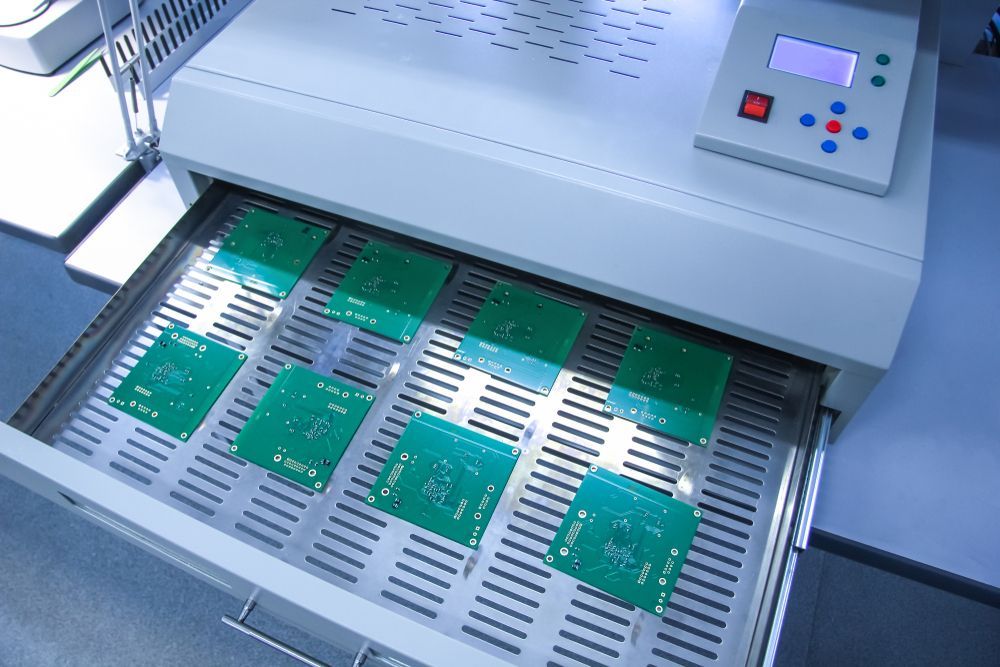
Reflow soldering is a core step in surface mount assembly, and the method you use directly affects solder joint quality, component reliability, and production speed. Different builds come with different heat sensitivities, material stacks, and layout challenges. Some boards need gentle, even heat. Others can handle faster ramps and air-based convection.
Choosing incorrectly can lead to warping, cold joints, or complete failure. Understanding what each process does well helps engineers avoid unnecessary troubleshooting and rework. Reflow affects how well a board holds up during inspection, test, and final use.
What Is Convection Reflow?
Convection reflow is one of the most widely used soldering methods in
PCB assembly. It uses heated air to melt solder paste and form electrical connections across surface-mounted components.
How Convection Reflow Works
Convection reflow uses forced, heated air to transfer thermal energy evenly across the PCB. Boards travel through a multi-zone oven where air is circulated to gradually raise temperatures. Solder paste reaches its melting point during a controlled peak phase, bonding components to pads. Cooling zones then stabilize joints before the board exits the oven. This method works well for standard assemblies and is widely supported across contract manufacturers. Performance depends on airflow balance, accurate profiling, and heat distribution across complex layouts.
Pros and Cons of Convection Reflow
Convection reflow is popular for a reason, but it isn’t perfect. Here's a quick breakdown of where convection reflow performs well and where it has limitations.
Pros:
- Widely available and cost-effective
- Compatible with most standard components
- Supports high-throughput production
Cons:
- Heat distribution can be uneven on dense boards
- Sensitive components may overheat
- Thermal profiles require careful tuning to avoid cold joints
What Is Vapor Phase Reflow?
Vapor phase reflow uses a heated vapor blanket to transfer heat evenly across the PCB. This technique delivers controlled thermal energy without relying on direct airflow or radiation.
How Vapor Phase Reflow Works
Vapor phase reflow takes place inside a sealed chamber filled with an inert liquid that boils at a set temperature, typically just above the melting point of solder. As the liquid vaporizes, it creates a uniform thermal blanket. When the cooler PCB enters the chamber, vapor condenses on its surface, releasing heat and soldering the components. The board cannot exceed the boiling point of the vapor, which helps protect heat-sensitive parts and maintain a consistent thermal profile.
Pros and Cons of Vapor Phase Reflow
Vapor phase reflow offers tight thermal control and excellent soldering consistency, especially for complex or heat-sensitive builds. But it comes with a few trade-offs to consider.
Pros:
- Uniform heat distribution across the entire board
- Prevents overheating due to a fixed maximum temperature
- Ideal for dense or uneven component layouts
Cons:
- Equipment costs more than convection ovens
- Slower cycle times in high-volume settings
- Less common among standard contract manufacturers
Vapor Phase Reflow vs Convection Reflow
Both reflow methods are used to melt solder and form strong electrical connections. Each one applies heat differently, which affects build quality, process control, and how components handle thermal stress.
Key Differences Engineers Should Know
The biggest difference comes down to heat transfer. Convection reflow uses hot air, which can vary across the board based on airflow and component density. Vapor phase reflow uses phase-change heating, which naturally limits maximum temperature and delivers uniform heat regardless of layout. That control gives vapor phase an edge in builds that need tighter margins or involve unusual material mixes. Convection still works well for standard runs, but vapor phase offers more consistency for small-batch, high-reliability, or prototype applications. It’s a key differentiator in advanced
PCB assembly solutions.
Which Method Is Better for Prototyping?
For prototypes, vapor phase reflow offers better protection against thermal stress, especially on boards with mixed components or sensitive parts. It reduces the risk of overheating and helps produce consistent joints on the first pass. Convection reflow is more common and easier to source, but may require tighter thermal profiling and adjustments to avoid issues. When precision and reliability are priorities, the vapor phase is often the safer choice for small runs and test builds.
How Ninja Circuits Uses Vapor Phase Reflow
Vapor phase reflow is part of our standard process for prototype and short-run builds. We use it to control temperature more precisely and avoid damage to sensitive components. Since the process naturally limits maximum temperature, we get consistent solder joints across complex or densely packed layouts. This matters when you're working on first-pass validation, tight timelines, or boards with nonstandard materials. Our vapor phase equipment is production-grade and optimized for speed, so we can build faster without compromising thermal control, joint quality, or assembly reliability.

When Ninja Circuits Is the Right Choice
If you're working under pressure, dealing with thermal challenges, or building something that needs to work on the first try, Ninja Circuits is built for you. We specialize in fast-turn assembly using processes that support complex layouts, tight clearances, and evolving designs.
Our vapor phase reflow process helps eliminate the guesswork that comes with thermal tuning, especially in small-batch or pre-production builds. Engineers choose us when reliability, timing, and communication matter. We keep your prototype moving forward, no matter how aggressive the schedule or how sensitive the parts involved in the assembly. Our team is trusted for
PCBA and prototyping services where precision and turnaround speed can't be compromised.
Speed Up Your Prototype with Ninja Circuits
Fast doesn’t have to mean risky. Our team uses vapor phase reflow to get consistent, high-quality solder joints without the heat-related issues that slow down other builds. Our process is built for speed, but always grounded in precision. You might be on a first iteration or finalizing a short-run release. Either way, we help you move faster without cutting corners. Upload your BOM, send your files, and talk to a real engineer.
Request a quote today and work with a team that builds fast, solves problems early, and treats your prototype like it's headed to production.
INDUSTRY INSIGHTS